
Myaamia Center celebrates 25 years of groundbreaking work at Miami University
The Miami Tribe of Oklahoma’s research arm focuses on language and cultural revitalization
Myaamia Center celebrates 25 years of groundbreaking work at Miami University
The Miami Tribe of Oklahoma’s research arm focuses on language and cultural revitalization
Videography by Cameron Johnson
It all began in a small room on the third floor of King Library.
Back in 2001, leaders from the Miami Tribe of Oklahoma and Miami University created the Myaamia Project. The collaborative research initiative aimed to revitalize the Myaamia language, culture, and Indigenous knowledge system that had all but vanished after the Myaamia people were forced from their homelands, including what is now Ohio.
By 2001, Miami already had a relationship with the Miami Tribe. For the previous decade, Tribe students had been attending the university’s Oxford campus through the Myaamia Heritage Award Program, which provides a tuition waiver and a four-year undergraduate college experience.
When linguist Daryl Baldwin came to Oxford as founding director of the Myaamia Project, he wasn’t sure where it would lead. University officials didn’t know either, but they gave him that small space in King Library and funding for three years, after which time they would evaluate whether to continue.
That was 25 years ago.
Today, the world renowned Myaamia Center, the Myaamia Project’s successor, continues the groundbreaking work in language and cultural revitalization that has led to the first generation in about 100 years learning to speak the Myaamia language and reconnecting with their cultural heritage.
“It has really been a process of healing — healing from the last 200 years of oppression and loss,” said Baldwin, executive director of the Myaamia Center, located in Bonham House.
If the tribal nation was going to survive into a modern era, Baldwin said, it “had to reclaim those important pieces of its identity with a heavy investment in tribal youth.”
He credits the unique relationship between the two Miamis — the sovereign tribal nation and the public educational institution — with playing a key role in supporting the Miami Tribe with its cultural awakening.
Baldwin, who received a MacArthur “genius grant” for his work in 2016, recently received the Research and Innovation Outreach Award at Mami’s faculty awards ceremony.
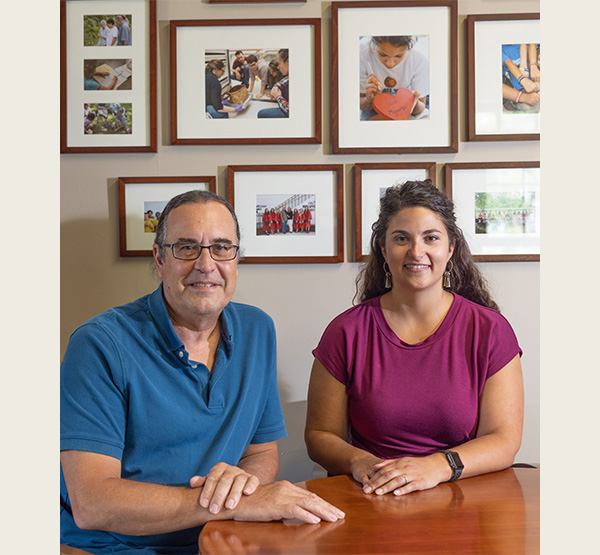
Kara Strass, Van Zant Director of Miami Tribe Relations for the Myaamia Center, said Baldwin’s recognition is well deserved, especially as the National Breath of Life Archival Institute for Indigenous Languages based in the Myaamia Center continues to assist other tribes in experiencing their own cultural awakening.
“Under his leadership, the work of National Breath of Life has continued to grow and evolve — now working with more than 20 Tribal Nations,” Strass said of Baldwin, who serves as co-director for the institute.
“This work will have lasting impact in the field of archives-based revitalization and continues to strengthen the Myaamia Center’s connection within Indian Country.”
Impact on identity
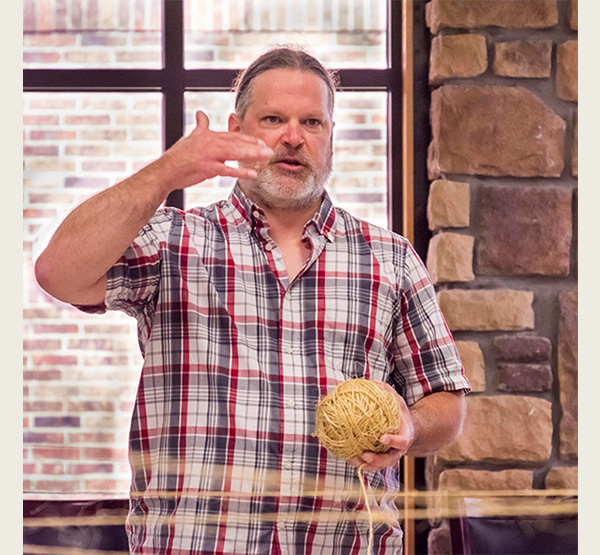
For more than eight years, Joshua Sutterfield ’05, MA ’09 has been cultural education director for the Tribe in Miami, Oklahoma. He is among several alumni of the Myaamia Heritage Award Program who are now in leadership positions with the Miami Tribe of Oklahoma. These positions exemplify how the program contributes to the next generation of leaders within the Tribe.
“Becoming a leader in the cultural department has been a long, rewarding journey, from a student beginning in 2001 to becoming a teacher and now administrator and creator of programs,” Sutterfield said. “Not to sound too cliché, but it truly gives meaning to my life. I get to share my experience with others and provide community members with tools that allow them to realize, express, and perform their identity as a Myaamia person.”
Sutterfield’s first year at Miami was also the first year of the Myaamia Project.
“I began doing my class projects focusing on the Tribe and quickly realized that I could do schoolwork and learn about my culture — a culture I knew little about. This led to an awakening of my identity as a Myaamia person,” Sutterfield said. “As my scholarship continued and my knowledge of Myaamia culture grew, I knew this was something I could do for the rest of my life, I just didn’t know to what extent.”
The Heritage Program as a class didn’t exist when Sutterfield first arrived but began to develop as he ended his undergraduate studies and began his master’s work.
Sutterfield said he “quickly realized that being in a room with other Myaamia people talking about Myaamia culture was exactly what I was looking for, not just as an academic endeavor or career path but as a focus as my identity.”
His time at Miami University provided him with the knowledge and opportunity to share what he learned with his family, he said.
“We always knew we were Myaamia but didn’t know what that meant,” he said. “Being able to share my experience with my family and the Tribe as a whole has become one of the most rewarding aspects of my life.”
Looking forward
The Myaamia Center, which started with one employee in 2001, has grown to 26 full- and part-time staff. Strass said the growth reflects that the Myaamia Center’s work meets the research and educational development needs of the Miami Tribe as it grows and evolves.
“The Myaamia Center has been at the forefront of the field of cultural revitalization, and it has had a vast impact on the Miami Tribe community,” she said.
Strass noted that Baldwin started this work because of an interest and passion for language, “but his legacy extends far beyond that within the Myaamia community, the Miami University community, and the world of community-based revitalization.
“He has grown and adapted as the needs of the community changed, and his tireless leadership has allowed the work of the Myaamia Center to grow exponentially,” she said, calling Baldwin a wonderful leader who empowers his employees to do their best individual work “while staying committed to community engagement.”
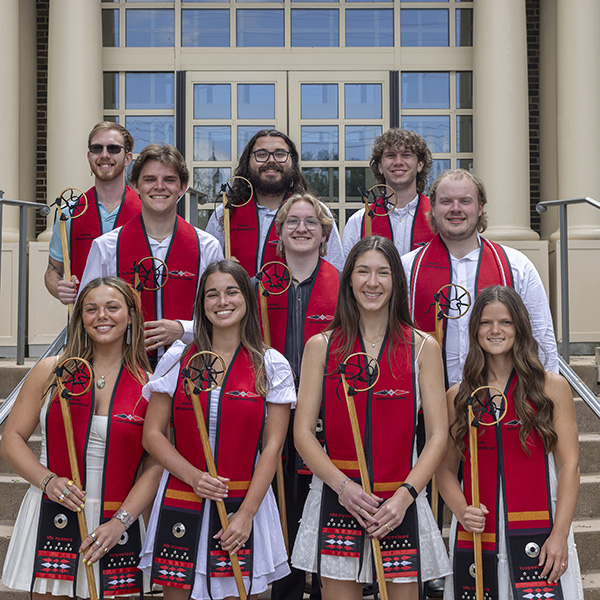
As the Myaamia Heritage Program turns 35 this year, it will reach a new milestone: 145 graduates of the program, including those who will be at this spring’s commencement.
Strass said 46 students are enrolled in the program this year.
“The growth of this program is tremendous as it reflects the fact that so many Myaamia students want an opportunity to learn about their Myaamia identity,” she said.
Strass said community building is central to everything they do with the students, “and our growing student numbers mean that we have an even larger cohort of students who have connected with each other and their Indigenous knowledge system. We are contributing to the next generation of Myaamia leaders, and it is very exciting to be a part of that work.”
As for the future? Strass wants to see the Myaamia Center continue to grow and evolve to meet the needs of the Myaamia community.
“We never know what that might look like, but by creating a foundation of professionals who can engage with the Myaamia knowledge system, we are well positioned to continue the work that we have already started and take advantage of any future opportunities,” she said.
“This work is helping to heal our community after a few hundred years of loss, and I hope that we will find that our ongoing work is contributing to both individual and community health.”
Growth after decline
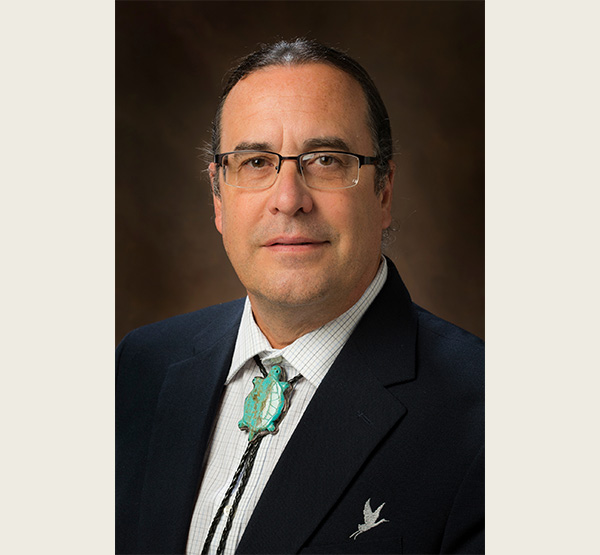
Baldwin feels fortunate that he can now see the growth of the Tribe after several generations before him witnessed decline and the inability to maintain language and cultural practices because of outside pressure to change their ways.
“But in the end, as I reflect back, I always wanted to give my kids more than I had in terms of their heritage, and I think I've done that,” he said. “Their knowledge of Myaamia, of ways of knowing and being, are much more advanced than mine was at their age.”
Today, the Myaamia community is vibrant and has reclaimed and strengthened itself, Baldwin said.
“The notion of health has become more central to our work because we're realizing that the work of revitalization, of breathing life back into one's identity, is actually an act of health,” he said.
“It brings stability for a younger generation who's coming up, who has this entire community they're connected to, and all the resources that a community brings to helping a young person through life.”